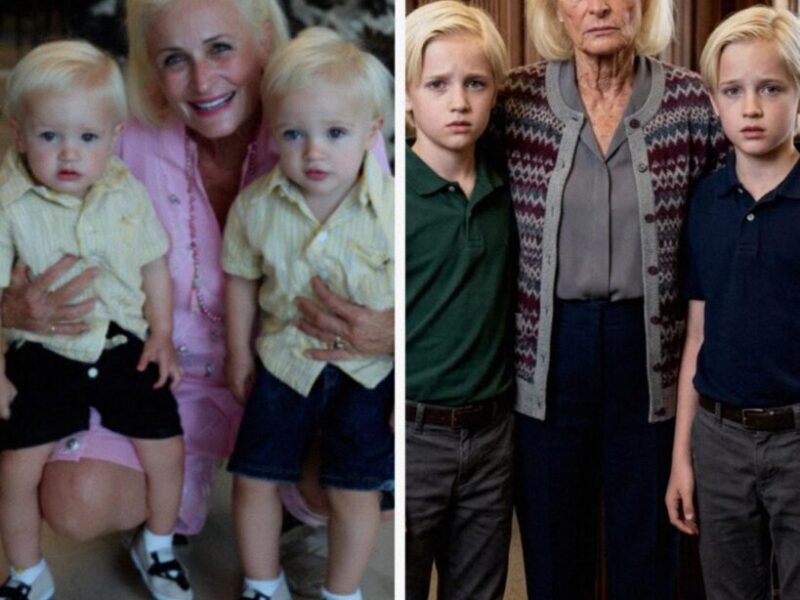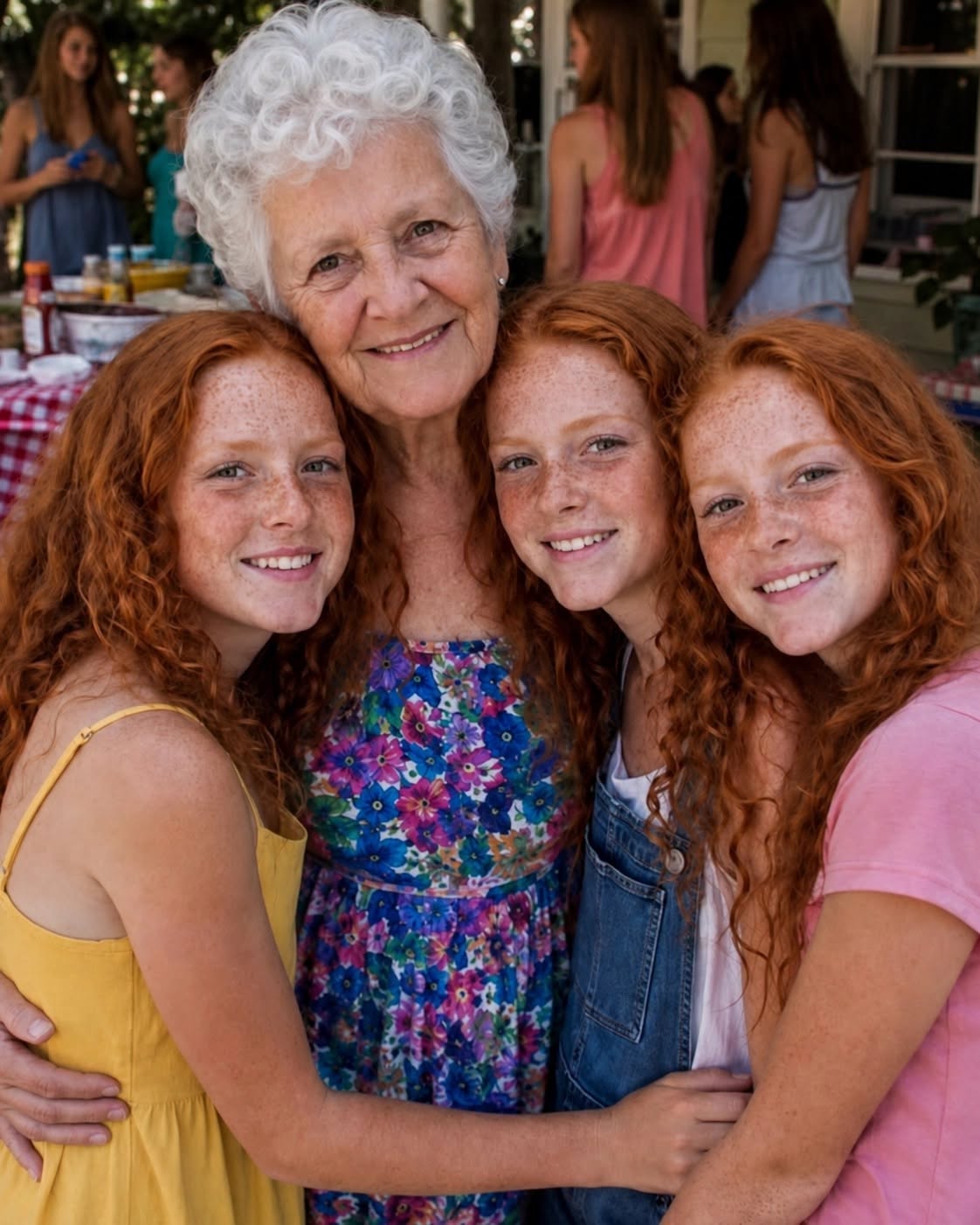
Amanda walked back into my house after fifteen years, her face painted with a confident, hollow smile as if motherhood were a garment she could simply slip back on whenever it suited her. She was the same woman who had coldly dumped her three infant daughters in my lap to pursue a “better life” of yachts and champagne, leaving me to raise them on nothing but grit and love. She truly believed her newfound wealth could erase the decade and a half of agonizing absence, but as she stood there waiting for a tearful reunion, the triplets had a different plan.
That specific knock—three sharp taps, a pause, and one final strike—still echoed in my nightmares even after fifteen years. I knew who was on the other side of the glass before I even rose from the couch. Lily, Grace, and Amelia, my beautiful, resilient granddaughters, froze mid-movie as the sound resonated through the house. When I opened the door, Amanda stood there in a cream-colored coat that looked far too expensive for our modest porch. She didn’t say “hello” or offer an apology. She simply whispered my name, “Bellina,” and brushed past me, her heavy, expensive perfume instantly clashing with the familiar, comforting scent of our home.
She chirped at the girls, expecting an immediate rush of maternal adoration. Instead, the triplets stood like statues, unmoved by her artificial warmth. “I know this is emotional,” she laughed, her voice straining with forced lightness, “but I can finally be your mother again. I have the money now to give you all the opportunities you missed out on.” She looked around my living room—the dented coffee table, the walls covered in school pictures, the evidence of a life built on sacrifice—with a look of condescending pity. She had spent years living in luxury resorts while I worked double shifts at a bakery and cleaned offices to ensure these girls never felt the weight of her abandonment.
Lily eventually broke the silence, her voice terrifyingly polite. “Mom, come in.”
The girls exchanged a silent, telepathic glance. They had prepared for this moment, though I hadn’t known it. Lily disappeared upstairs and returned with a white gift bag tied with a shimmering gold ribbon. Amanda’s eyes lit up, clearly expecting expensive jewelry or some token of gratitude for her return. She settled onto the couch, oblivious to the fact that she was sitting in a home where she had no roots.
“We always thought you might come back,” Lily said, handing her the bag.
Amanda untied the ribbon with eager fingers, only to find bundles of letters, crude construction-paper cards, and shaky handwriting from years past. As she unfolded a note about a lost tooth, then another about learning to ride a bike, her face drained of color. These weren’t accusations; they were the raw, honest archives of a childhood she had traded for a passport. They were letters written to a ghost. When she reached the final bundle, the letters simply stopped—at age ten.
“There must be more,” Amanda gasped, her hands trembling.
“We stopped writing,” Grace said, her voice steady. “We realized we weren’t writing to a person. We were writing to an empty place.”
Amelia then handed her a small, worn wooden box. Inside were the “recipe cards” I had written for them over the years—not for food, but for life. When life feels too heavy, make hot chocolate in the chipped blue mug. When you’re sad and don’t know why, hang laundry outside. Amanda read them one by one, watching as her daughters looked at these scraps of paper with more reverence than they had ever shown her. She realized then that she hadn’t just missed birthdays; she had missed the entire architecture of their souls.
The dinner that followed was the longest, coldest meal of my life. The girls talked and laughed with each other, weaving a tapestry of shared history that excluded Amanda entirely. She tried to insert herself, but she was a stranger in a house built on the very love she had discarded. She watched the rhythm of our lives—the way Amelia anticipated my needs, the way Lily teased Grace—and finally, the realization crashed over her. She hadn’t been “waiting” to be a mother; she had forfeited the right.
As she prepared to leave, Amanda’s eyes were bloodshot. “I really believed that if I came back with enough money, I could fix everything,” she whispered, her voice cracking.
I didn’t offer a platitude. I simply said, “Childhood doesn’t wait for anyone, Amanda.”
Amelia stepped forward and handed her one last card. It was blank, save for one line of my handwriting: When life gives you another chance…
“I don’t know what belongs underneath,” Amanda sobbed.
“Grandma always says recipes aren’t finished until the person making them adds something of their own,” Amelia replied gently. “You get to decide.”
Amanda took the card, tucked it away as if it were a fragile promise, and walked out the door. She didn’t look back at the house; she looked at her daughters, seeing them for the first time not as the burdens she had dumped, but as the women she had failed to earn. As she drove away, the silence in the room was not one of grief, but of profound peace. I looked at the girls and realized that while I had spent years fearing this day, I had nothing to worry about. They were never writing to a mother; they were writing to a memory. And that memory had finally been laid to rest.