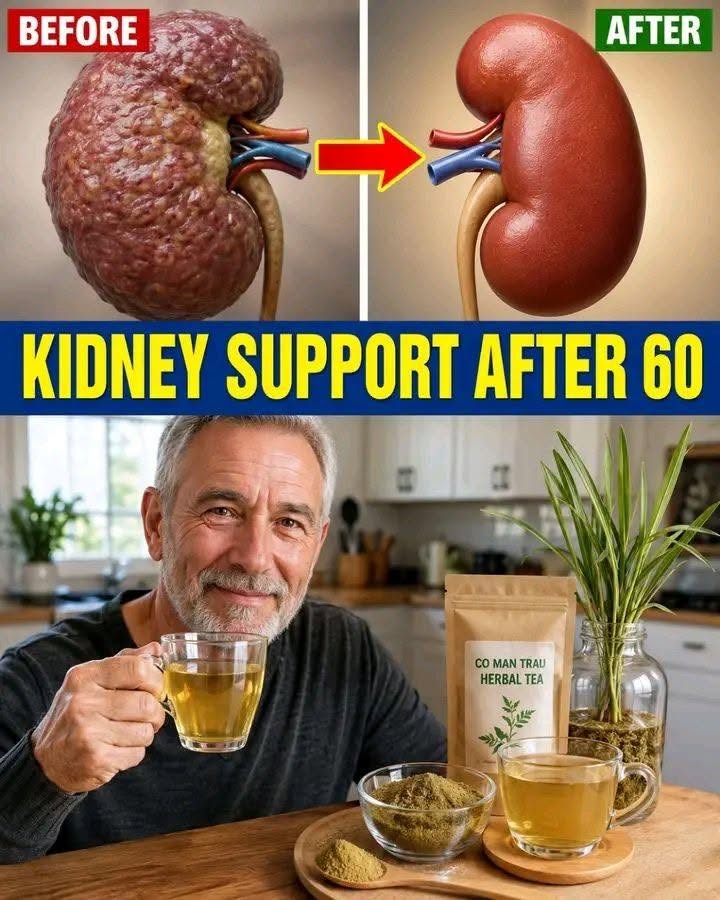
Before & After: How a Cup of Goosegrass Tea Became a Daily Ritual for Kidney Support
There’s something about turning 60 that makes you pay attention.
Not in a fearful way — but in a wise way. You start noticing what your body needs. You remember what your grandmother used to say. And you realize that sometimes, the simplest remedies are the ones that stick.
That’s exactly what’s happening with goosegrass tea.
People over 60 keep asking about kidney health. And a routine with a cup of goosegrass tea feels familiar, gentle, and easy to remember. It’s not a complicated protocol. It’s not an expensive supplement. It’s just a humble herb — often dismissed as a weed — that’s been used for generations to support the body’s natural filtering system.
Why Goosegrass? Why Now?
Goosegrass — also known as cleavers, Galium aparine, or “stickyweed” — has a long history in traditional medicine across Europe, Asia, and the Americas . Herbalists have valued it for centuries as a mild diuretic and lymphatic cleanser.
But here’s what matters for people over 60: kidney function naturally declines with age. The kidneys filter less efficiently, fluid retention becomes more common, and the risk of kidney stones increases.
Goosegrass tea addresses these concerns in a gentle, supportive way — not by “curing” anything dramatically, but by helping the body do what it’s supposed to do .
What the Research Says
Modern science is starting to catch up with traditional knowledge.
Goosegrass contains compounds like iridoid glycosides, flavonoids, and tannins that contribute to its anti-inflammatory and diuretic properties . These active constituents help:
- Flush waste and excess fluid from the kidneys through increased urination
- Support lymphatic drainage, which reduces swelling and supports immune function
- Alkalinize urine, which may help prevent the formation of kidney stones
A recent safety study on goosegrass extract found no toxic effects on the kidneys or liver, even at high doses, suggesting it’s safe for regular use when prepared properly .
That said, it’s important to be clear: goosegrass does not reverse kidney failure. Claims that it can cure advanced kidney disease are false — kidney failure requires dialysis or transplant . But for supporting kidney health, reducing fluid retention, and preventing minor issues? The evidence is promising.
How to Make Goosegrass Tea
The beauty of goosegrass tea is its simplicity. Here’s the method that’s been passed down through generations:
Traditional Infusion:
- Fill a quart jar loosely with fresh goosegrass stems and leaves (or use 1–2 teaspoons of dried herb)
- Pour boiling water over the herb
- Cover and steep for 4–6 hours (this creates a nourishing infusion, not just a quick tea)
- Strain and refrigerate
- Drink 1–2 cups daily, warm or iced
Quick Tea Method:
- Steep 1–2 teaspoons of dried goosegrass in a cup of boiling water for 5–10 minutes
- Strain and enjoy up to twice daily
For kidney support specifically, some traditions recommend drinking ½ glass twice daily .
A Gentle Reminder
If you have a pre-existing kidney condition or take prescription medications, always check with your healthcare provider before starting any herbal routine . Herbs can interact with medications, and your doctor knows your specific health picture best.
The Bottom Line
Goosegrass tea isn’t a miracle. It’s better than that — it’s real, gentle, and backed by generations of use.
For people over 60 who want to support their kidneys without harsh chemicals or complicated protocols, a daily cup of goosegrass tea feels like coming home to an old friend. Familiar. Easy. And quietly effective.